√World Bank Graduate Scholarship Program (WBGSP)
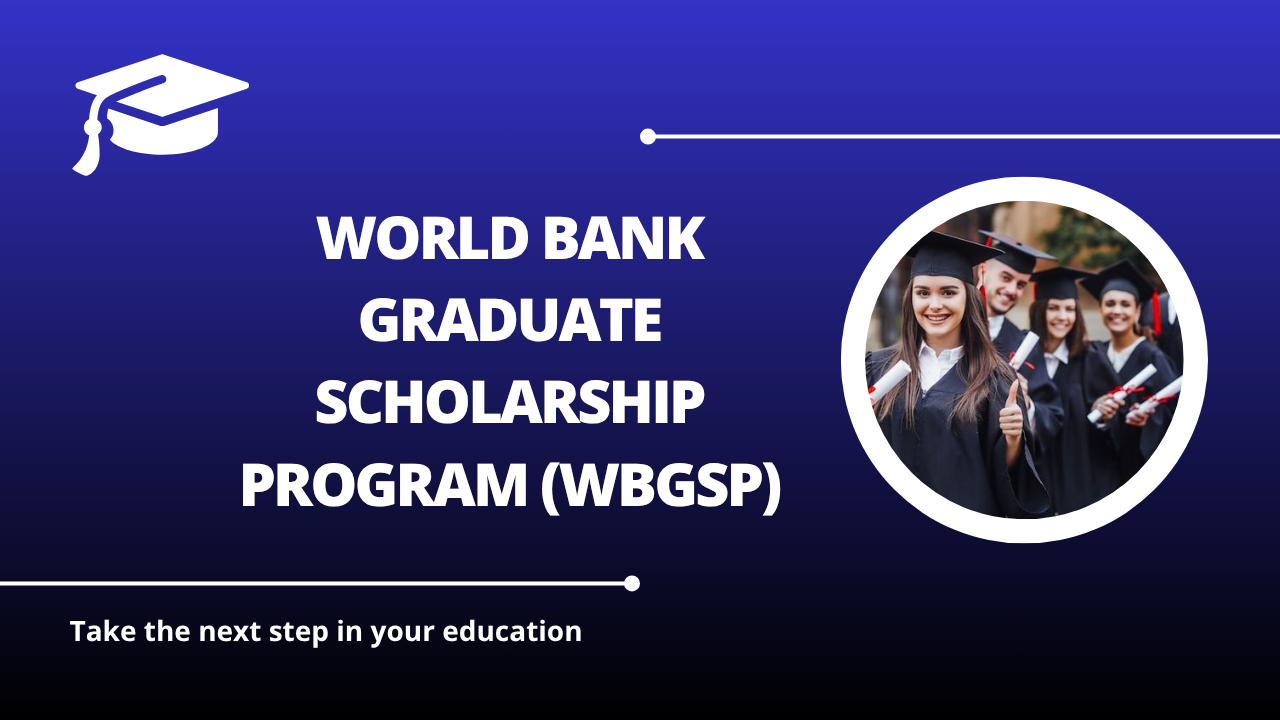
Education has the power to change lives and shape the future. For students from developing nations, access to quality education abroad often seems like a distant dream due to financial limitations. However, the World Bank Graduate Scholarship Program (WBGSP) is turning that dream into reality.
This fully funded scholarship offers talented individuals from developing countries a chance to pursue master’s degrees at leading universities around the world. Beyond financial aid, it also builds a global network of professionals dedicated to advancing sustainable development in their home countries.
In this comprehensive guide, you’ll learn everything you need to know about the WBGSP, from its benefits and eligibility requirements to the application process and tips for success.
1. What Is the World Bank Graduate Scholarship Program (WBGSP)?
The World Bank Graduate Scholarship Program, also known as the Joint Japan/World Bank Graduate Scholarship Program (JJ/WBGSP), is a prestigious initiative funded by the Government of Japan and managed by the World Bank.
Its main goal is to support skilled professionals from developing countries who want to pursue graduate studies related to development. By doing so, the program helps build future leaders who will contribute to economic growth and social progress in their home nations.
Unlike many other scholarships, the WBGSP specifically targets individuals who are already working in development-related fields and who plan to use their education to make a tangible difference.
2. Key Objectives of the WBGSP
The program’s objectives go far beyond funding education. It seeks to:
-
Enhance capacity in developing countries by training professionals in critical development areas.
-
Promote global knowledge exchange by connecting scholars and experts worldwide.
-
Encourage innovation in addressing economic and social challenges.
-
Support leadership development, helping scholars become influential change-makers.
These goals reflect the World Bank’s broader mission to fight poverty and promote sustainable global growth.
3. Who Can Apply for the WBGSP?
The WBGSP is open to candidates who meet strict eligibility criteria. Applicants must:
-
Be a national of a World Bank member developing country.
The program excludes applicants who hold dual citizenship in a developed country. -
Have a bachelor’s degree earned at least three years before the application deadline.
-
Possess at least three years of development-related work experience.
-
Be employed full-time in a development-related organization at the time of application.
-
Be admitted to a participating master’s program at one of the approved universities.
-
Be in good health and ready to commit to full-time study abroad.
The World Bank prioritizes candidates who show a strong commitment to returning home and applying their new skills in their countries’ development efforts.
4. Scholarship Benefits: What Makes WBGSP Unique
The WBGSP is a fully funded scholarship, covering all major educational expenses. Its benefits include:
-
Full tuition coverage for the duration of the study program.
-
Monthly living stipend to cover accommodation, meals, and other expenses.
-
Round-trip airfare between the scholar’s home country and the host university.
-
Travel allowance for additional educational activities.
-
Health insurance coverage during the study period.
These benefits ensure that scholars can focus entirely on their academic and personal growth without worrying about financial burdens.
5. Top Participating Universities
The WBGSP partners with many world-class universities known for excellence in economics, public policy, and development studies. Some of the popular participating institutions include:
-
Harvard University (United States)
-
University of Tokyo (Japan)
-
University of Oxford (United Kingdom)
-
University of Melbourne (Australia)
-
Keio University (Japan)
-
Columbia University (United States)
These universities offer a diverse range of development-related programs, enabling scholars to study in environments that encourage innovation, collaboration, and real-world problem-solving.
6. Fields of Study
The WBGSP focuses on development-oriented master’s programs. Common fields of study include:
-
Public Policy and Administration
-
Economics and Finance
-
Environmental Management
-
Infrastructure Development
-
Health and Education Policy
-
Urban Planning and Development
By supporting these fields, the World Bank ensures that scholars gain the skills needed to design and implement policies that foster sustainable progress.
7. How to Apply for the WBGSP
Applying for the WBGSP involves several important steps. Since competition is high, preparation is key.
Step 1: Review Eligibility and Deadlines
Visit the official World Bank scholarship website and confirm that you meet all eligibility requirements. Deadlines vary by program, so check carefully.
Step 2: Apply to a Participating University
You must first be admitted to one of the approved master’s programs before applying for the scholarship. Without an admission letter, your application will not be considered.
Step 3: Gather Required Documents
Typical documents include:
-
Admission letter from a partner university
-
Academic transcripts and diplomas
-
Proof of professional experience
-
Recommendation letters
-
Statement of purpose or development motivation essay
Step 4: Submit the Online Application
Applications are submitted online through the official World Bank Scholarship Portal. Be sure to upload all documents in the correct format and before the deadline.
Step 5: Wait for Notification
Successful applicants are usually notified by email a few months after the deadline. If selected, you’ll receive detailed instructions on the next steps, including visa and travel arrangements.
8. Tips for a Successful Application
Since the WBGSP is extremely competitive, it’s essential to stand out. Here are some tips to help strengthen your application:
-
Show commitment to development: Clearly explain how your work and future plans contribute to your country’s progress.
-
Write a powerful statement of purpose: Be authentic and highlight your leadership, motivation, and potential impact.
-
Select strong referees: Choose people who can speak confidently about your academic abilities and professional achievements.
-
Be precise and organized: Submit a clean, well-structured application without errors.
-
Apply early: Don’t wait until the last minute — technical issues or missing documents can cost you your chance.
Consistency and clarity often make the difference between being shortlisted and overlooked.
9. Why Choose the WBGSP?
Many scholarships offer funding, but the WBGSP goes a step further by connecting scholars to a global community of development professionals. This program provides not just financial support but also:
-
Prestige and credibility in the international development field.
-
Access to global networks through the World Bank and partner universities.
-
Opportunities for leadership development through workshops and research collaboration.
-
Real impact potential, as alumni often return home to work in government, academia, or NGOs.
Graduates of the WBGSP have gone on to become influential policymakers, researchers, and leaders who drive development in their regions.
10. Conclusion
The World Bank Graduate Scholarship Program (WBGSP) is more than just a scholarship — it’s a life-changing opportunity to grow academically, professionally, and personally. Through this program, the World Bank continues to empower individuals from developing countries to become global change-makers.
If you are passionate about development, eager to study abroad, and committed to making a difference in your community, the WBGSP could be your path to success. Start preparing early, gather your documents, and take that bold step toward a brighter future.
Your journey to becoming a leader in development could begin with just one application — and the World Bank Graduate Scholarship Program is the perfect place to start.
- Author: Rendy muhammad