√Scholarships in South Korea for Bachelor’s, Master’s, and PhD Programs
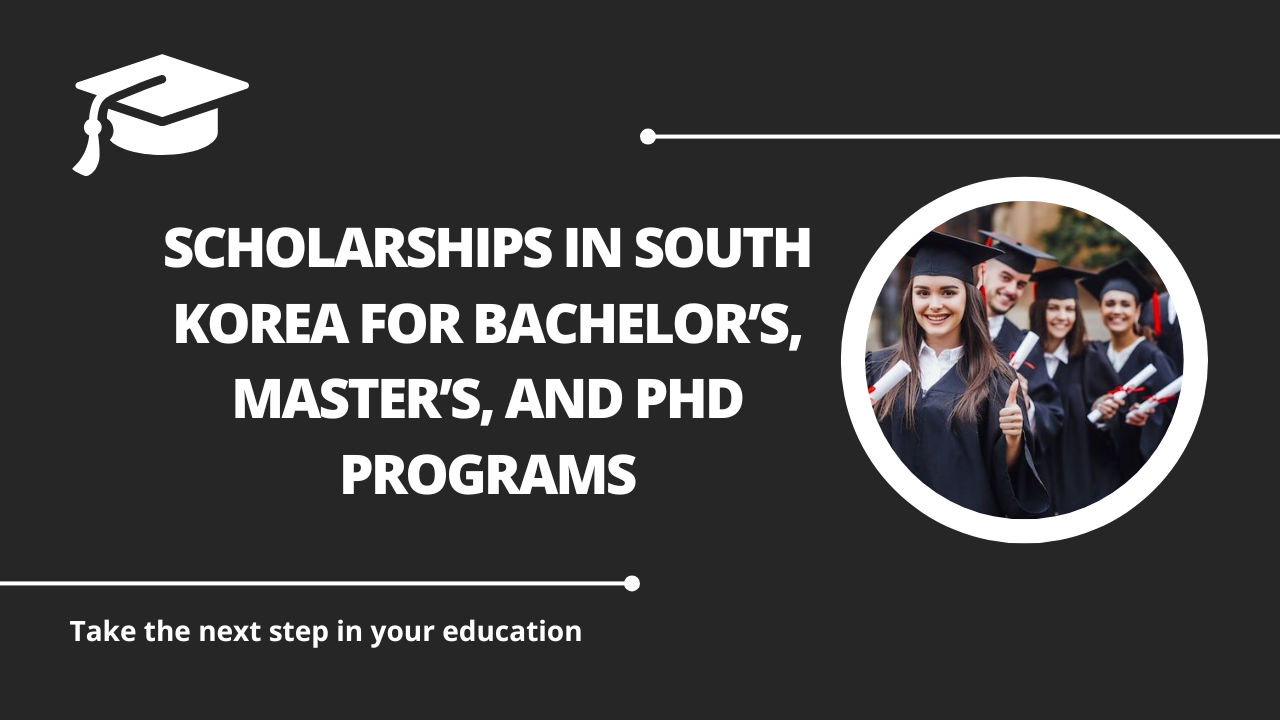
South Korea has rapidly become one of the most attractive study destinations in Asia — and for good reason. With its world-class universities, high-tech environment, and a culture that blends tradition with modernity, it’s no surprise that thousands of international students flock to Korean campuses each year.
From Seoul’s academic hubs to the research-focused institutions of Daejeon and Pohang, South Korea offers an exceptional educational experience at every level — Bachelor’s, Master’s, and PhD.
But studying abroad can be expensive. The good news? South Korea offers a wide range of scholarships that make education affordable — and sometimes completely free — for talented international students. This article explores the best scholarships in South Korea across degree levels, how to apply, and what you can expect as a global learner.
Why Study in South Korea?
Before diving into scholarship details, it’s worth understanding why South Korea is such a compelling choice for higher education:
-
Top-Ranked Universities: Institutions like Seoul National University (SNU), KAIST, POSTECH, and Korea University consistently rank among the world’s best.
-
Affordable Education: Compared to the U.S., U.K., or Australia, South Korean universities offer lower tuition fees and living costs.
-
High-Tech Innovation: As a global leader in technology and innovation, Korea is home to major corporations like Samsung, Hyundai, and LG.
-
Cultural Experience: Students can immerse themselves in rich Korean traditions while enjoying modern city life and world-famous entertainment.
-
Strong Job Prospects: Many Korean universities have industry partnerships that create career pathways after graduation.
1. The Global Korea Scholarship (GKS)
The Global Korea Scholarship (GKS) — formerly known as the Korean Government Scholarship Program (KGSP) — is South Korea’s most prestigious scholarship for international students.
Who It’s For:
-
International students applying for Bachelor’s, Master’s, or PhD programs.
-
Applicants from countries that maintain diplomatic relations with South Korea.
What It Covers:
-
100% of tuition fees
-
Round-trip airfare
-
Monthly living allowance (₩900,000–₩1,000,000)
-
One-year Korean language course
-
Medical insurance and settlement allowance
How to Apply:
You can apply through two tracks:
-
Embassy Track: Submit your application via the South Korean Embassy in your home country.
-
University Track: Apply directly to one of the participating universities.
The GKS is highly competitive but remains one of the best opportunities for full financial support and cultural immersion in Korea.
2. University-Specific Scholarships
Almost every major Korean university offers scholarships specifically designed for international students. These programs are often merit-based, need-based, or linked to specific study fields.
a. Seoul National University (SNU) Scholarships
-
SNU President Fellowship (SPF): For outstanding PhD students from developing countries.
-
Graduate Scholarship for Excellent Foreign Students (GSFS): Covers tuition and provides living stipends for Master’s and PhD students.
b. Korea Advanced Institute of Science and Technology (KAIST)
-
KAIST International Student Scholarship: Provides full tuition coverage, living expenses, and medical insurance for undergraduate and graduate students in STEM-related programs.
c. Yonsei University
-
Underwood International College (UIC) Global Scholarship: Merit-based award for Bachelor’s students covering full or partial tuition.
-
Yonsei Graduate Research Scholarship: Available for high-achieving Master’s and PhD candidates.
d. Korea University (KU)
-
KU Global Leader Scholarship: 100% tuition coverage for exceptional undergraduate students.
-
KU International Students Scholarship: For graduate students with strong academic performance.
e. POSTECH (Pohang University of Science and Technology)
-
Offers full tuition and monthly stipends for Bachelor’s, Master’s, and PhD students in engineering, science, and research-related programs.
3. Private and Corporate Scholarships
In addition to government and university funding, several private foundations and companies offer scholarships to international students.
a. POSCO TJ Park Foundation Scholarship
-
Designed for students from Asian countries pursuing graduate degrees.
-
Covers tuition, living expenses (₩1,000,000 per month), and settlement support.
b. Samsung Global Hope Scholarship Program
-
Targets students from developing countries.
-
Provides full tuition, living expenses, and research support.
-
Often available for students at Sungkyunkwan University (SKKU), one of Korea’s top private universities.
c. Hyundai Motor Chung Mong-Koo Foundation Scholarship
-
For international students in engineering, business, and environmental studies.
-
Includes a stipend, mentorship, and professional development support.
d. LG Yonam Foundation Scholarship
-
For Master’s and PhD students studying science and technology.
-
Offers full or partial tuition and monthly allowance.
4. Research and Innovation-Based Scholarships
South Korea is known for its research-driven education, particularly in science, technology, and engineering. The government and universities actively promote postgraduate studies through research grants and scholarships.
a. Korea Research Fellowship (KRF)
-
Supports outstanding postdoctoral researchers.
-
Provides funding for research projects, living expenses, and relocation costs.
b. Brain Korea 21 (BK21) Program
-
A national initiative to promote global research excellence.
-
Provides funding to graduate students and research assistants working in innovation-driven projects.
c. NRF Scholarship (National Research Foundation)
-
For Master’s and PhD students engaged in academic research in Korea.
-
Covers tuition, research expenses, and a stipend.
5. Eligibility Requirements
While each scholarship has its own criteria, here are common requirements for most programs in South Korea:
-
Strong academic record with a GPA of 3.0/4.0 or higher.
-
Proof of English or Korean proficiency, such as TOEFL, IELTS, or TOPIK scores.
-
Statement of Purpose or Study Plan explaining academic and career goals.
-
Letters of recommendation from professors or academic supervisors.
-
Health certificate and valid passport for visa processing.
Most scholarships emphasize academic excellence, research potential, and leadership qualities.
6. Application Process
Applying for scholarships in South Korea requires preparation and organization. Here’s a general step-by-step guide:
-
Choose Your Program and University — Research which universities offer your desired program and check if they provide scholarships for your degree level.
-
Review Eligibility Criteria — Carefully check requirements for each scholarship.
-
Prepare Documents — Gather transcripts, certificates, recommendations, and language test results.
-
Write a Strong Personal Statement — Emphasize why you want to study in Korea, your academic goals, and your future aspirations.
-
Submit Your Application — Apply directly to the university or through the Korean Embassy (for government scholarships).
-
Prepare for Interviews — Some scholarships may require an online or in-person interview.
-
Wait for Results — Selection results are usually announced 2–3 months after the deadline.
Pro Tip:
Start your application at least six months in advance to give yourself time to gather documents and prepare for language tests.
7. Life as an International Student in South Korea
South Korea provides a safe, modern, and vibrant environment for international students. Most universities have dedicated international offices to assist with accommodation, orientation, and visa support.
You’ll also find opportunities to work part-time during your studies — typically up to 20 hours per week — to supplement your living costs.
Beyond academics, South Korea offers rich experiences in food, art, music, and nature — from Seoul’s urban culture to Jeju Island’s breathtaking landscapes.
8. Post-Graduation Opportunities
After completing your studies, you can stay in South Korea under a D-10 Job-Seeking Visa to find employment. Graduates from top universities often find jobs in global corporations or research institutes.
With Korea’s strong global connections and innovation-driven economy, your degree will open doors both domestically and internationally.
Conclusion
South Korea is not just a leader in technology and pop culture — it’s also a world-class destination for higher education. Whether you’re pursuing a Bachelor’s, Master’s, or PhD, there are generous scholarships that make studying in Korea accessible for talented students from around the world.
From the fully funded Global Korea Scholarship to university-specific and corporate grants, the country provides multiple paths for ambitious learners to achieve their goals.
So, if you’ve ever dreamed of studying in one of Asia’s most dynamic and innovative countries, start exploring your options today. Your scholarship in South Korea could be the first step toward a global future.
- Author: Rendy muhammad