√Fully Funded Study Opportunities through Erasmus Mundus
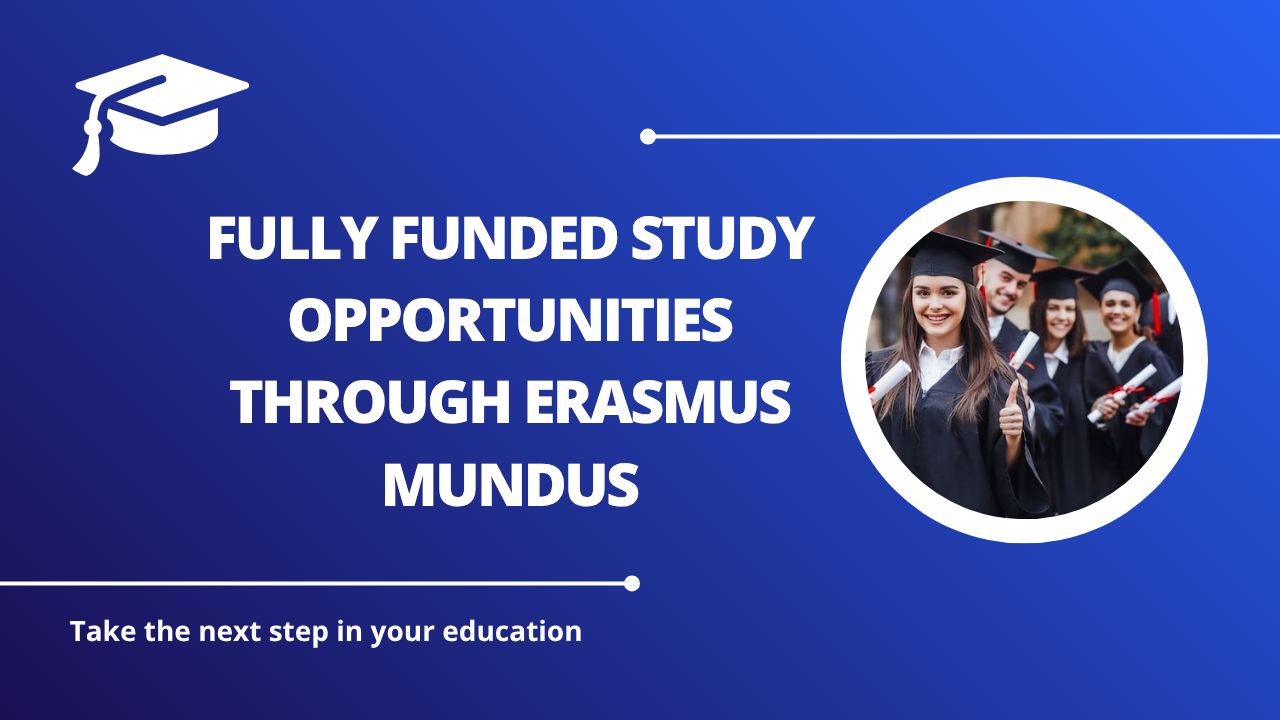
For many ambitious students around the world, studying in Europe is a dream. With its world-class universities, cultural diversity, and innovative research opportunities, Europe stands as one of the best destinations for higher education. However, the cost of studying abroad can be a challenge. Fortunately, the Erasmus Mundus Scholarship provides fully funded study opportunities for talented students from all countries.
This program, supported by the European Union (EU), enables international learners to pursue master’s degrees in multiple European countries — all with 100% financial support. From tuition to living expenses, Erasmus Mundus covers everything, making it one of the most generous and prestigious scholarships available.
What Is the Erasmus Mundus Program?
The Erasmus Mundus Joint Master Degree (EMJMD) is an international program that offers students the chance to study at two or more European universities. The program is designed by a consortium of universities, meaning that students experience different academic environments, teaching methods, and cultures during their studies.
Graduates receive a joint, double, or multiple degree recognized by all participating universities, giving them a unique edge in the global job market.
Erasmus Mundus focuses on promoting international cooperation, educational excellence, and cultural exchange — turning every participant into a true global citizen.
Why Choose Erasmus Mundus?
Erasmus Mundus is not just a scholarship — it’s a life-changing experience. Here’s why it stands out among global scholarship opportunities:
1. Fully Funded Support
Every Erasmus Mundus awardee receives:
-
Full tuition fee coverage
-
Monthly living allowance (around €1,000–€1,200)
-
Travel costs and visa fees
-
Health insurance throughout the program
-
Relocation and installation grants
This means that students can fully focus on their education without worrying about financial stress.
2. Study in Multiple Countries
Unlike traditional scholarships, Erasmus Mundus allows students to study in at least two European countries. For example, a student might start in Spain, continue in Italy, and finish in Sweden — all within the same program.
This unique mobility experience broadens academic horizons and builds adaptability, global awareness, and cultural intelligence.
3. Global Recognition and Prestige
Erasmus Mundus programs are offered by top European universities known for academic excellence and research innovation. A degree earned through this scholarship is widely respected by employers, organizations, and academic institutions worldwide.
4. Cultural Exchange and Networking
Erasmus Mundus is more than just studying — it’s also about building connections. Students join a global network of scholars, professionals, and alumni who continue to collaborate and support each other long after graduation.
5. Career Opportunities
Graduates often find high-level positions in multinational companies, NGOs, international organizations, and academia. Employers value Erasmus graduates for their multicultural experience, language skills, and flexibility.
Eligibility for Erasmus Mundus Scholarships
The Erasmus Mundus program is open to students from all countries, both EU and non-EU. Each program may have slightly different criteria, but the general requirements include:
-
A bachelor’s degree (or equivalent) from a recognized university.
-
English proficiency, typically proven through IELTS, TOEFL, or similar tests.
-
A strong academic background relevant to the chosen field.
-
Motivation letter, CV, and recommendation letters.
Some programs may ask for specific prerequisites, such as work experience or a portfolio for creative fields.
💡 Tip: Always read the requirements carefully on each program’s official page, as every consortium sets its own admission criteria.
How to Apply for Erasmus Mundus
Applying for Erasmus Mundus Scholarships requires careful preparation. Here’s a step-by-step guide:
Step 1: Explore the Erasmus Mundus Catalogue
Go to the official Erasmus Mundus website and browse the full list of available master’s programs. You can filter by subject, university, or country to find the best match for your goals.
Step 2: Choose Up to Three Programs
You can apply to a maximum of three Erasmus Mundus programs per year. Select those that align closely with your academic interests and career ambitions.
Step 3: Prepare Required Documents
Most programs will ask for:
-
Bachelor’s transcripts and diploma
-
Motivation letter
-
Two recommendation letters
-
Proof of English proficiency
-
Updated CV (preferably Europass format)
-
Passport copy
Step 4: Submit Application Online
Applications are submitted directly through each consortium’s website — not through a central portal. Deadlines usually fall between October and January for the next academic year.
Step 5: Selection and Results
After evaluation, selected candidates will be notified between March and May. Successful applicants receive detailed instructions about visa processing, travel arrangements, and enrollment.
🗝️ Pro Tip: Write a clear and passionate motivation letter showing how your background fits the program’s goals and how you can contribute to its diversity.
Examples of Erasmus Mundus Programs
There are over 150 Erasmus Mundus master’s programs across different disciplines. Below are some popular ones for international students:
1. Erasmus Mundus Master in Public Health in Disasters (EMPHID)
Focus: Health management and emergency response in crisis situations.
Partner Universities: Universidad de Oviedo (Spain), Karolinska Institute (Sweden).
2. Erasmus Mundus Master in Data Science (DSS)
Focus: Data analysis, machine learning, and artificial intelligence.
Partner Universities: Université Libre de Bruxelles (Belgium), University of Southampton (UK).
3. European Master in Tourism Management (EMTM)
Focus: Sustainable tourism, management, and cultural heritage.
Partner Universities: University of Girona (Spain), University of Ljubljana (Slovenia).
4. Erasmus Mundus Master in Sustainable Transportation and Logistics (EMTL)
Focus: Smart logistics, urban mobility, and green transportation.
Partner Universities: Riga Technical University (Latvia), University of Rome Tor Vergata (Italy).
5. Erasmus Mundus Master in Journalism, Media, and Globalization (EMJMG)
Focus: International journalism, communication, and media ethics.
Partner Universities: Aarhus University (Denmark), University of Amsterdam (Netherlands).
Tips for a Successful Erasmus Mundus Application
-
Start Early: Gather your documents months before the deadline.
-
Be Specific: Tailor your motivation letter to each program.
-
Show Impact: Highlight leadership, volunteering, or research that aligns with global development.
-
Seek Feedback: Ask mentors or alumni to review your application.
-
Stay Organized: Track deadlines and document versions carefully.
Life as an Erasmus Mundus Scholar
Life as an Erasmus Mundus student is exciting, challenging, and transformative. You’ll move between universities, adapt to new cultures, and learn from professors and peers from every continent.
Students often describe it as a journey that changes how they see the world — both personally and professionally. Besides academics, Erasmus scholars participate in field trips, internships, and collaborative research, building a strong foundation for global careers.
The alumni network also opens doors to global job opportunities and lifelong friendships.
Conclusion
The Erasmus Mundus Scholarship offers fully funded study opportunities that combine academic excellence, cultural immersion, and professional growth. It’s not just a scholarship — it’s a pathway to becoming a globally minded leader.
Whether you dream of studying environmental science in Sweden, data science in Belgium, or global journalism in Denmark, Erasmus Mundus can make it happen — without financial barriers.
Start your application today and take the first step toward a world-class European education and a truly international future.
- Author: Rendy muhammad